Jiu-Jitsu has a quiet way of turning everyday stress into steady confidence you can actually feel.
Confidence is easy to talk about and harder to build in a way that sticks. We see it all the time in Chattanooga: people want to feel capable in their bodies, calmer under pressure, and more sure of themselves in day-to-day situations, not just “in theory.” Jiu-Jitsu does that because it gives you real problems to solve, real feedback, and real progress you can measure.
What surprises many new students is how quickly the mental benefits show up. In research on Brazilian Jiu-Jitsu, 87.6% of adult practitioners reported improved confidence, and 87.5% reported reduced anxiety. For kids, parents reported confidence gains as high as 96.4%, along with meaningful improvements in mood and life skills that carry over into school and home. Those numbers match what we aim to build here: skills you can use and a mindset you can keep.
This article breaks down how training works, why it changes you, and how you can start in a way that feels approachable, even if you have never stepped on a mat before.
Why Jiu-Jitsu Builds Confidence That Lasts
“Lasting confidence” is different from hype. It is not a temporary motivational spike. It is the calm feeling that you can handle something hard, because you have handled hard things before. Jiu-Jitsu trains that in a practical, almost unavoidable way.
When you train, you learn to breathe while you are uncomfortable, think while you are tired, and keep moving even after a mistake. Over time, your brain starts treating pressure as a familiar environment instead of a threat. Researchers describe this as resilience and mental flexibility, and studies show strong improvements in both for practitioners across age groups.
A big reason confidence sticks is that progress is earned. You do not “get credit” for intention on the mat. You get credit for learning timing, posture, leverage, and decision-making. That honest feedback loop becomes a strength. It also helps explain why Jiu-Jitsu has been linked to greater confidence gains than more traditional training approaches.
The skill ladder is real, and you can feel it
Early on, confidence comes from small wins: escaping a hold you could not escape last week, remembering a grip sequence, or staying relaxed in a scramble instead of panicking. Later, it becomes bigger: controlling pace, choosing the right technique for the moment, and helping newer teammates through the same learning curve.
We coach that progression on purpose. Our goal is not to throw you into chaos and hope you adapt. Our goal is to give you structure, steady resistance, and clear next steps, because that is how confidence gets built with fewer bumps.
Stress Relief and Anxiety Reduction: What Changes in Your Body
Chattanooga is active, but it is also busy. Work deadlines, family schedules, and the general background noise of life can keep your nervous system “on” all the time. Jiu-Jitsu helps because it demands present-moment focus. You cannot replay an email thread in your head while someone is passing your guard.
Physically, training helps regulate stress through exertion and recovery. You push, you breathe, you reset. Endorphins help, of course, but the deeper shift is learning to stay composed while something is intense. That skill is portable. The same breathing you use under pressure on the mat can help you in a meeting, in traffic, or when life feels a little too loud.
In studies, 87.5% of adult practitioners reported reduced anxiety. That does not mean training replaces medical care when you need it, but it does mean Jiu-Jitsu is a powerful tool for building steadier internal gears.
Calm under pressure is a trained skill, not a personality trait
Some people walk in thinking, “I am just not athletic,” or “I freeze when I get stressed.” We treat that as a starting point, not a label. With consistent practice, your body learns what pressure feels like and stops overreacting to it. You become harder to rattle, and that is a form of confidence that other people can notice.
Chattanooga Benefits: Why This City Responds So Well to Training
Jiu-Jitsu in Chattanooga fits the local rhythm. People here hike, climb, paddle, run, and work jobs that demand focus and grit. Training supports that lifestyle because it improves body awareness, mobility, and durability, while also sharpening decision-making.
We also serve a community with a meaningful population of veterans and first responders. Research trends continue to highlight sustained mental health improvements for high-stress groups through grappling-based training, including reductions in PTSD symptoms in longitudinal work. The structure matters: consistent practice, trusted teammates, and a safe way to experience stress and then recover from it.
And for families, the youth benefits are hard to ignore. Parents are looking for something that helps kids manage anxiety, develop discipline, and build social confidence without relying on a screen. The data backs it up: parents reported confidence improvements up to 96.4% in children, with strong gains in mood and life-skill transfer.
What You Learn in Our Beginner Track (And Why It Works)
Beginners do best when expectations are clear. We focus on fundamentals that create quick understanding while staying safe and controlled. You will learn to move with balance, protect yourself, and solve problems in layers, not all at once.
Here is what we emphasize early because it makes everything else easier:
• Position first: understanding where you are safe and where you are vulnerable, so technique has context
• Escapes and defense: getting out of bad spots builds confidence faster than “winning” anything
• Basic control: how to hold position without relying on strength or speed
• Simple submissions: learning the mechanics so you understand what is happening and why
• Safe sparring habits: how to train with intensity while protecting your partner and yourself
This approach keeps the learning curve realistic. You will still feel challenged, but it is the good kind of challenge, the kind where you leave class thinking, “Okay, I can build on that.”
No-Gi Focus: Why Nogi Jiu-Jitsu in Chattanooga Keeps Growing
Nogi Jiu-Jitsu in Chattanooga has grown for a reason: it is straightforward, athletic, and highly adaptable. Without the gi, you rely less on cloth grips and more on body positioning, underhooks, head position, and control through movement. Many beginners like it because it feels less technical at first glance, even though the depth is absolutely there.
No-gi is also a natural fit for practical self-defense goals. Real-world situations do not come with sleeves and collars, so learning to control and escape using your body makes sense. It can feel fast, but we coach pacing carefully so you can learn safely and steadily.
If you are unsure whether to start in gi or no-gi, we can help you choose based on your goals, schedule, and comfort level. The important part is starting and staying consistent.
What to wear for your first no-gi class
You do not need fancy gear to begin. For your first session, we typically recommend:
1. A rash guard or snug athletic shirt that stays in place during movement
2. Grappling shorts or gym shorts without pockets or zippers for safety
3. Flip-flops or slides for walking off the mat area
4. A water bottle, because you will sweat more than you expect
5. A willingness to learn and tap early, because that is how you improve
We keep the environment beginner-friendly. You will get guidance on etiquette, safety, and how rounds work, so you are not guessing.
How Confidence Develops for Kids, Teens, and Adults
Confidence looks different at different ages, but the engine is similar: kids and adults gain confidence by facing manageable challenges, getting coached through them, and realizing they can do more than they thought.
Kids: structure, boundaries, and social ease
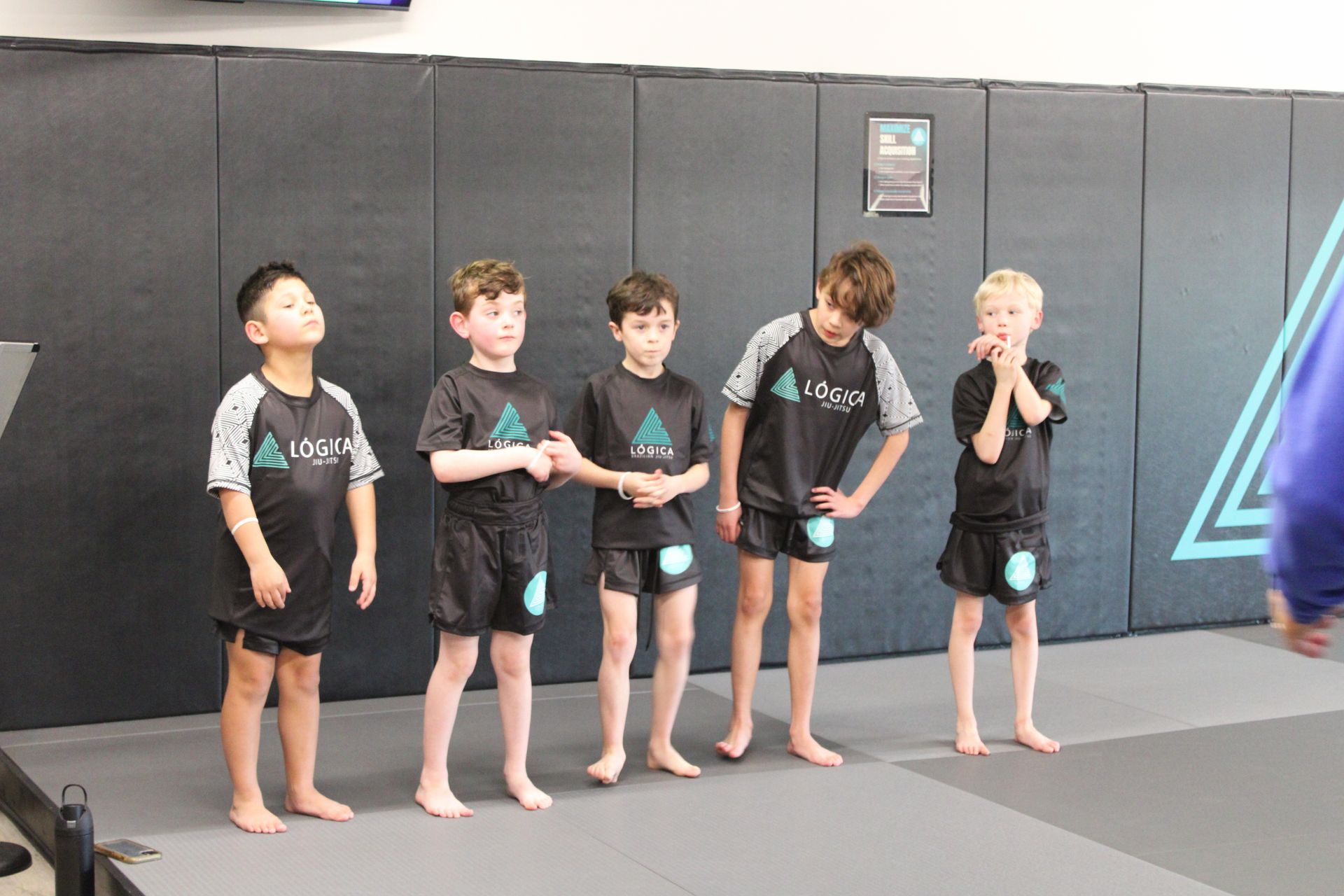
For kids, training can become a “third place” where structure is consistent and expectations are clear. We reinforce listening skills, respectful partner work, and the habit of continuing after a mistake. Parents often tell us the change shows up at home first: better emotional regulation, more patience, and fewer blow-ups over small things. Research supports those experiences, with parents reporting strong anxiety reduction and mood improvements.
Teens: identity, pressure, and real competence
Teens deal with pressure from school, sports, and social life, and it can be hard to find something that feels authentic. Jiu-Jitsu rewards effort over image. You cannot fake the work, but you also do not get punished for being new. That balance helps teens build genuine self-respect.
Adults: stress management and agency
Adults often start because they want fitness, but stay because of agency. Knowing you can control a situation, escape a hold, or stay calm in discomfort changes how you carry yourself. Many adults also notice better focus at work and improved mood, which aligns with research showing high rates of mood and wellbeing improvements for practitioners.
The “Resilience Loop”: Why the Mindset Transfers Off the Mat
One of the most useful parts of Jiu-Jitsu is how it changes your relationship with failure. In most areas of life, failure feels final or embarrassing. On the mat, it is information. You try a technique, it does not work, you adjust, and you try again.
That loop builds a growth mindset, and it is not just a feel-good phrase. It is a practical way to approach goals. Over time, you stop avoiding hard things, because you have practiced being bad at something and improving anyway. That becomes confidence you can carry into job changes, parenting challenges, and big life transitions.
We also see a strong community effect. In research, a sense of belonging is reported at exceptionally high levels among practitioners. When you train consistently, your teammates become part of your week, and that social anchor matters more than many people expect.
Safety, Culture, and What to Expect in Your First Week
We take safety seriously because it is what allows you to train consistently. You will learn how to tap, how to apply techniques with control, and how to choose training intensity based on your experience level. Nobody benefits when training turns into reckless wrestling.
In your first week, expect to feel a mix of excitement and information overload. That is normal. Your body is learning new movement patterns, and your brain is building a map of positions and options. We keep classes structured so you can focus on the next right thing, not everything at once.
If you have specific concerns, like training over 30, returning after time off, or starting as a complete beginner, we can work with that. Jiu-Jitsu scales. We can make it intense, but we can also make it sustainable.
Take the Next Step
Building real confidence is not about flipping a switch. It is about stacking small proof points until your mindset changes. That is what we focus on every day: safe, progressive Jiu-Jitsu that teaches you how to stay calm, think clearly, and handle pressure with skill instead of guesswork.
When you are ready to start training in Chattanooga, we will help you choose the right entry point, whether you are interested in fundamentals, no-gi, youth classes, or a balanced schedule. And when you walk out after a few weeks, you will usually notice it first in the little moments: better posture, steadier breathing, and a quieter kind of confidence.
Lógica Brazilian Jiu-Jitsu: Start Training with Us in Chattanooga
At Lógica Brazilian Jiu-Jitsu, we build confidence the honest way: through coaching, repetition, and a supportive room where you can learn without feeling out of place. If you want Jiu-Jitsu in Chattanooga that develops practical skill and a resilient mindset, our programs are designed to meet you where you are and keep you progressing.
You do not need to be tough before you start. You get tougher by starting, showing up, and letting the process work.
Turn your knowledge into hands-on training by joining a Jiu-Jitsu class at Lógica Brazilian Jiu-Jitsu.