Jiu-Jitsu gives you a clear, repeatable path from feeling unsure to moving with calm, earned confidence.
If you are new to Jiu-Jitsu, the hardest part is rarely the workout. It is the not knowing: what to wear, how class works, what positions matter, and whether you will be the only beginner in the room. We built our beginner experience in Chattanooga to remove that fog fast, because confidence grows when the steps are clear.
Brazilian Jiu-Jitsu is also booming for a reason. Search interest has climbed more than 104 from 2004 to 2024, and millions of people train worldwide. That kind of growth usually means the same thing for you as a beginner: proven training methods, a deep community, and a system that works if you stick with it.
This guide walks you through exactly how we help beginners build real skills, safe habits, and the kind of confidence you can feel outside the gym too.
Why Jiu-Jitsu builds confidence faster than most fitness routines
Confidence is not just motivation. It is evidence. In Jiu-Jitsu, you get evidence every class because the goals are concrete: escape a bad position, hold top control, finish a clean submission, or simply stay calm when you are tired.
We also like that progress is measurable without needing perfect athleticism. You can be strong, small, flexible, stiff, young, older, brand new to sports, or experienced. The art rewards decision-making, timing, and technique, so confidence can grow even before your conditioning catches up.
Another reason confidence comes quickly is the training environment. You do not have to guess if something works. You drill it, then test it with live resistance at a pace that matches your level. That feedback loop is powerful, and it is why so many students report noticeable changes within a few months of consistent training.
Your first class in Chattanooga: what to expect and how to prepare
Walking into the first class should feel straightforward. We keep the structure predictable so you can focus on learning, not on trying to decode the room.
What to wear and bring
For a first session, keep it simple. Wear comfortable athletic clothes that you can move in. If you are starting in no-gi, think fitted training gear that will not snag. Bring water, and if you have one, a towel. Most beginners also appreciate arriving a bit early so nothing feels rushed.
How the class usually flows
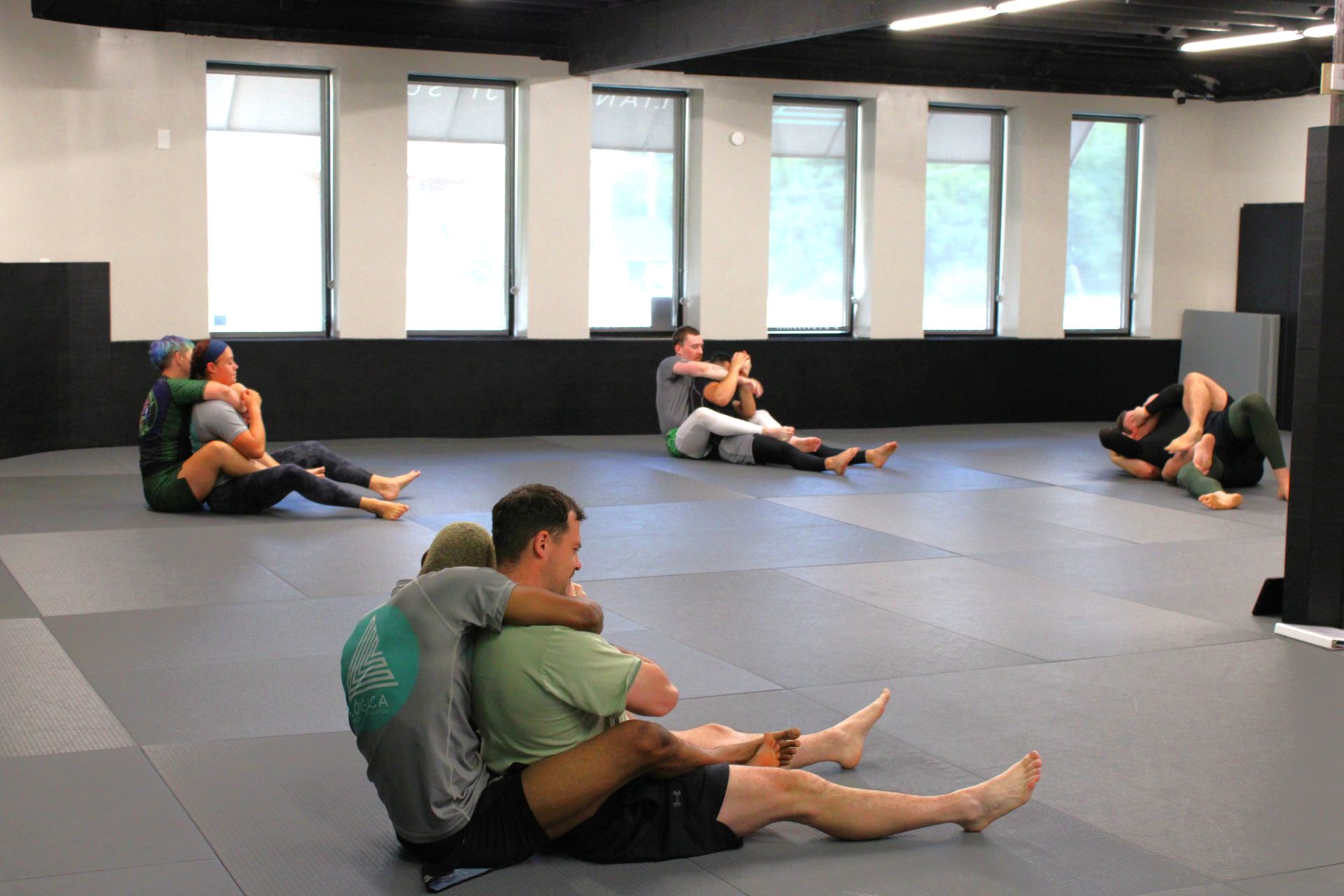
We start with a warm-up that supports the movements you will use on the mat. Then we teach a small set of techniques with clear goals, followed by drilling. Depending on the day and the class format, there may be controlled sparring. If you are brand new, we scale the intensity so you can learn safely and leave feeling like you actually understood what happened.
The mindset that makes the first week easier
Your only job at the beginning is to stay curious. You are not expected to win. You are expected to learn positions, practice safely, and ask questions. If you do those things, you are doing it right.
The step-by-step beginner roadmap we use to build confidence
Beginners improve faster when training follows a sequence. Random techniques feel exciting, but they do not build confidence like a connected system does. Our approach starts with survival and movement, then layers in control and finishing.
1. Learn the core positions and what winning looks like in each one
You will hear terms like guard, side control, mount, and back control. We teach what each position is, why it matters, and the simple goals that guide your decisions.
2. Build escapes first, because safety creates confidence
Escapes are your foundation. When you know you can get out, you relax. When you relax, you learn faster. We emphasize posture, frames, hip movement, and timing so you can survive bad spots without panic.
3. Add basic control and guard passing
Once you can defend, we show you how to stay on top with balance and pressure, and how to pass common guards without getting swept. This is where beginners start to feel that calm, steady control that makes Jiu-Jitsu so addictive.
4. Introduce submissions as a natural finish, not a wild scramble
Modern competition data shows chokes are the most common finishes, around 65 at events like ADCC 2024, while arm attacks come next. That lines up with what we teach beginners: high-percentage chokes and clean, position-first submissions.
5. Layer in stand-up and takedown entries at a beginner pace
Wrestling-heavy approaches have been trending in no-gi, and you will see why. A simple, repeatable takedown game builds confidence fast, especially when you learn how to fall safely and how to stand back up without giving up easy control.
What you will learn early (and why it matters in real life)
The best beginner curriculum is not a bag of tricks. It is a short list of skills that solve many problems. Early on, we focus on principles that show up everywhere:
• How to protect your neck and keep strong posture under pressure
• How to use frames and hip movement to create space instead of muscling
• How to recognize when you are safe, when you are in danger, and what to do next
• How to control a larger person through leverage, angles, and balance
• How to tap early, train smart, and keep the room safe for everyone
If your goal includes self-defense, these fundamentals matter more than flashy techniques. Real situations are messy, and the ability to stay calm, manage distance, and control position is what carries over.
Gi vs no-gi: which should a Chattanooga beginner choose
You do not have to pick a side forever. The better question is what you want to emphasize right now.
The gi slows things down a bit and gives you grips that make posture and control very obvious. Many beginners like that because it helps them feel the mechanics. No-gi moves faster, relies more on body positioning and underhooks, and connects well with modern grappling trends. Interest in Nogi Jiu-Jitsu in Chattanooga has grown alongside the national boom, and we see plenty of students who enjoy the pace and practicality.
If you are unsure, we guide you toward a balanced start. Build fundamentals, learn to move well, and let your preference develop naturally once you have a few weeks on the mat.
How to train 2 to 3 times per week without burning out
Consistency beats intensity, especially for beginners. Training two to three times per week is enough to build conditioning, skill, and confidence while keeping your body happy.
We also plan for the reality that life happens. People travel, work gets hectic, kids get sick, motivation dips. The key is having a simple default plan you can return to. If you can make two classes most weeks, you will improve steadily. If you can hit three, you will feel the difference even faster.
Pay attention to recovery early. Sleep, hydration, and a little mobility work go a long way. Your first month might include some sore neck and forearms, which is normal, but it should not feel like you are getting wrecked every session.
Safety, tapping, and injury prevention for beginners
We take safety seriously because it is the only way you can train long enough to gain the benefits. The good news is that the sport culture supports that. You tap, your partner stops, and you reset.
Competition stats also tell an encouraging story for beginners. High-level matches show chokes are more common than joint attacks, and that typically means controlled finishing mechanics are emphasized. In day-to-day training, we keep things even safer by focusing on positions, timing, and communication.
A few beginner rules we coach constantly are simple but important: tap early, avoid sudden explosive bridging if you do not know where your neck is, and never fight a locked-in submission out of pride. Pride does not help your progress.
The confidence timeline: what changes in 30, 90, and 180 days
Confidence is a skill, and it grows in phases. Here is what many beginners experience when they train consistently.
Around 30 days
You recognize positions and you stop feeling lost. You start breathing better under pressure. You also learn who to ask for help, which matters more than you might think.
Around 90 days
Your escapes begin to work on people near your level. You can hold top position longer. You start connecting techniques, like pass to side control to submission, instead of doing isolated moves.
Around 180 days
You feel calmer in hard rounds. Your body moves differently in everyday life, more balanced and coordinated. Many students also notice their mindset changing at work and at home because they have practice staying composed in uncomfortable moments.
Why Jiu-Jitsu in Chattanooga is growing, and what that means for beginners
Nationally, BJJ is now widely viewed as the fastest-growing combat sport in the US, and the economics and community reflect that. The global market is projected to keep expanding through the next decade, and more people are looking for training that blends fitness with practical skill.
Locally, that growth is good for you if you are a beginner, because it pushes programs to be clearer, safer, and more structured. We have seen that the students who thrive are the ones who start with a step-by-step plan, train consistently, and focus on fundamentals instead of trying to collect techniques.
If your goal is confidence, we recommend measuring progress in small wins: staying calm, escaping once more per round, improving posture, and learning to reset after a mistake. That is how confidence becomes real.
Ready to Begin
If you want a beginner path that feels clear from day one, we built our programs at Lógica Brazilian Jiu-Jitsu to make Jiu-Jitsu approachable without watering it down. You will learn how to move safely, defend intelligently, and build skills that translate into calm confidence over time.
Whether you are drawn to gi training, Nogi Jiu-Jitsu in Chattanooga, or a mix of both, we will help you choose a starting point and a weekly rhythm that fits your life and keeps you progressing.
If you’re curious about Jiu-Jitsu training, join a class at Lógica Brazilian Jiu-Jitsu and learn from the ground up.