
A smart, consistent Jiu-Jitsu practice can turn stress into structure and long days into real momentum.
If you are a professional in Chattanooga, your calendar probably has opinions about your health goals. Meetings run long, screens win, and workouts become the first thing you “reschedule.” That is one reason Jiu-Jitsu has taken off so fast: it is efficient, mentally engaging, and flexible enough to fit real life.
Interest in Brazilian Jiu-Jitsu has climbed dramatically over the last two decades, with search growth outpacing older martial arts and the global market projected to keep rising through the next decade. That growth is not just hype. It reflects what we see every week: people want training that improves fitness, clears the mind, and builds resilience without relying on high-impact pounding.
In this guide, we will break down how Jiu-Jitsu supports focus, fitness, and balance for busy Chattanooga professionals, how to start without feeling overwhelmed, and how we structure training to keep you progressing while respecting your body and schedule.
Why Jiu-Jitsu fits the Chattanooga professional lifestyle
A good training plan does not ask you to become a different person. It meets you where you are and gives you a repeatable system. Jiu-Jitsu works especially well for professionals because it rewards consistency more than intensity, and it trains your brain and body at the same time.
Focus you can actually feel
The fastest way to stop thinking about your inbox is to do something that demands full attention. On the mat, you cannot half-participate. You have to notice posture, frames, grips, balance, timing, and breathing. That single-task focus is not a motivational poster idea, it is a practical reset button.
We also coach you to use simple cues during training: breathe through transitions, relax your shoulders, and solve one problem at a time. Over time, that “one problem at a time” habit shows up at work, too. Complex projects stop feeling like a wall and start feeling like a sequence.
Fitness without the high-impact tax
If running or heavy lifting is your thing, great. But many professionals want conditioning without adding more wear and tear. Jiu-Jitsu builds strength, mobility, and work capacity through controlled resistance and repeated movement patterns. You will squat, hinge, pull, rotate, and stabilize, but the goal is efficiency, not punishment.
No two rounds feel exactly the same, which keeps training fresh. One day you will leave feeling like you did deep mobility work. Another day it feels like intervals. Either way, you get a full-body stimulus in a way that is easier to sustain long-term.
Balance that is more than “work-life balance” talk
Real balance is not perfect scheduling. It is having something in your week that belongs to you, that is challenging in a good way, and that resets your perspective.
A consistent Jiu-Jitsu practice becomes a boundary in the best sense. It is a place where you can train hard, laugh a little, learn constantly, and walk out feeling lighter. The mat has a funny way of making small annoyances feel small again.
What makes Jiu-Jitsu different from “just another workout”
Most fitness programs are about output: calories, pace, sets, and reps. Jiu-Jitsu includes output, but it is built on skill. Skill changes how you move, and how you move changes how you feel in your body.
Because technique matters, smaller and less athletic people can learn to solve problems against bigger training partners. That is not magic. It is leverage, posture, timing, and positioning. For professionals who like learning systems, that technical depth is a big part of the appeal.
It is also a reason the sport keeps growing. Estimates place global practitioners in the millions, with hundreds of thousands in the United States alone. Tournaments are expanding, prize money is increasing, and no-gi competition trends are pushing faster wrestling-heavy exchanges. But you do not need to compete to benefit. You just need a smart room, a safe structure, and a plan.
Gi vs no-gi: choosing what fits your schedule and goals
One of the first questions we hear is whether you should start in the gi or jump straight into no-gi. The honest answer is that both are useful, and your best choice depends on what makes you show up consistently.
The gi: slower pace, strong fundamentals
The gi slows things down and gives you more handles to control distance and posture. That can be great for learning mechanics, especially if you are brand new and want time to think. It also builds gripping strength and encourages clean movement because sloppy posture gets exposed quickly.
No-gi: fast feedback, athletic transitions
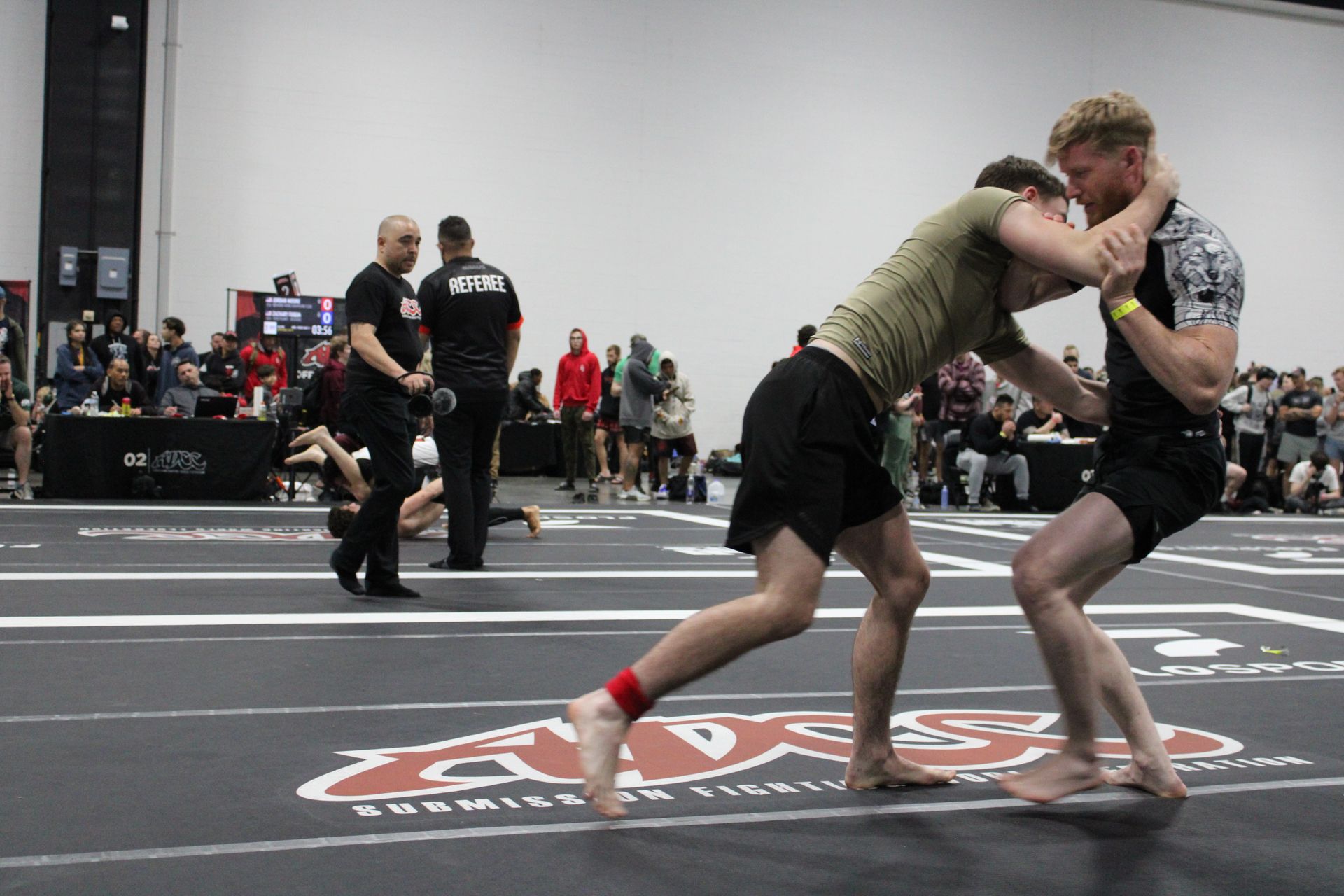
Nogi Jiu-Jitsu in Chattanooga is popular for a reason. No-gi tends to be faster, sweatier, and more scramble-heavy, with a strong emphasis on takedowns, controlling from the top, and staying connected without fabric grips. Current competition data reflects that trend: wrestling-style takedowns have increased, and high-percentage finishes like chokes remain dominant.
If your schedule is tight, no-gi can also feel simpler to start because you need less gear. Still, we like pairing no-gi training with strong fundamentals so your progress is stable instead of streaky.
A realistic weekly training plan for busy professionals
You do not need to train every day to get real benefits. In fact, one of the biggest mistakes busy adults make is going from zero to “five days a week,” getting sore, tweaking something, and disappearing for months.
A smarter approach is boring in the best way: repeatable, sustainable, and built around recovery. Here is a simple structure we recommend for many new students.
1. Start with two classes per week for the first month to build familiarity and reduce injury risk
2. Add a third session only when your sleep and soreness feel manageable
3. Keep at least one rest day between harder sessions when possible
4. Treat mobility like brushing your teeth: five to eight minutes most days
5. Track consistency, not perfection, because consistency wins
This is also where a clear class schedule matters. When you can look at the class schedule page, pick two reliable days, and protect them, training becomes part of your week instead of a constant negotiation.
How we coach beginners in Jiu-Jitsu (without throwing you into chaos)
If you have never trained before, it is normal to worry about feeling lost. We build beginner-friendly structure into the program so you know what you are working on and why.
We focus on a few priorities early on: posture, base, breathing, and safe movement. Then we layer in escapes, guard retention concepts, and a simple top game. You will still get live practice, but we scale intensity and match you appropriately so you can learn instead of just surviving.
A typical class includes technical instruction, partner drilling, and controlled rounds where you apply what you learned. You will make mistakes. That is part of it. The goal is to make better mistakes over time, and eventually fewer of them.
Injury risk, desk-job bodies, and how we train smarter
Let us be straightforward: Jiu-Jitsu is a contact sport, and injuries happen. A frequently cited study reports that a majority of athletes experienced at least one injury over a six-month period, which is a real number that deserves respect.
But “risk exists” is not the same as “risk is unavoidable.” Our job is to structure training so you can keep showing up.
Our practical approach to reducing injuries
• We teach you how to tap early and often, and we treat tapping as skill, not ego
• We emphasize positioning before submissions so you do not scramble into bad angles
• We coach pacing so you are not going full speed when you cannot yet control your body
• We encourage honest communication with training partners, especially around intensity
• We build habits that protect common problem areas for professionals: neck, shoulders, hips, and lower back
Desk work often creates tight hips, rounded shoulders, and a stiff upper back. Jiu-Jitsu can help, but only if you move well. We take warm-ups and movement quality seriously, and we will absolutely tell you to slow down if that is what keeps you training next month.
What you will notice after 30, 60, and 90 days
Progress in Jiu-Jitsu is not linear, but patterns show up consistently when you train two to three times per week.
In the first 30 days, most professionals notice better breathing under pressure and improved body awareness. You start recognizing positions and you stop feeling like everything is happening at once.
Around 60 days, your conditioning improves in a practical way. Stairs feel easier. Long workdays feel less draining. You also begin to develop “go-to” escapes and a few reliable controls.
By 90 days, something shifts mentally. You start trusting the process. You can have a rough day at work and still walk into class, because training is no longer a decision. It is just part of who you are becoming.
Getting started: gear, cost control, and keeping it simple
Starting does not have to be expensive or complicated. For many students, the simplest path is to begin with what you need for the classes you will attend most consistently.
If you are starting no-gi, you can often begin with a rash guard and grappling shorts. If you are starting in the gi, you will need a gi that fits well. We can help you avoid common sizing mistakes so you are not fighting your sleeves the whole class.
As for the bigger “investment” question, our view is simple: the best value is a plan you can sustain. A membership that fits your schedule beats an ambitious plan you never use.
Ready to Begin
Building focus, fitness, and balance is not about finding more willpower. It is about choosing a practice that rewards you for showing up, even when you are busy. Jiu-Jitsu gives you that: skill development, real conditioning, and a mental reset that carries into your workday.
If you want a clear path forward in Jiu-Jitsu in Chattanooga, we would love to help you start in a way that feels welcoming, structured, and realistic. At Lógica Brazilian Jiu-Jitsu, our goal is simple: make your training sustainable so progress becomes inevitable.
Build real grappling skills and improve your technique by joining a Jiu-Jitsu class at Lógica Brazilian Jiu-Jitsu.