The right Jiu-Jitsu training does more than teach techniques, it changes how you carry yourself everywhere you go.
If you have been curious about Jiu-Jitsu in Chattanooga, you are not alone. Brazilian Jiu-Jitsu has grown into one of the most popular martial arts in the U.S., and the reason is practical: it teaches you how to solve real problems with leverage, positioning, and calm decision-making under pressure.
In our classes, we see the same pattern again and again. People show up wanting fitness, self-defense, structure, or a new challenge, and what keeps them training is the steady confidence that shows up outside the mats too. The skills are technical, but the benefits are very human.
This guide explains how Jiu-Jitsu works, what you can expect from training in Chattanooga, how we structure our programs, and how to start in a way that is safe, sustainable, and honestly enjoyable.
Why Jiu-Jitsu works for real life, not just the gym
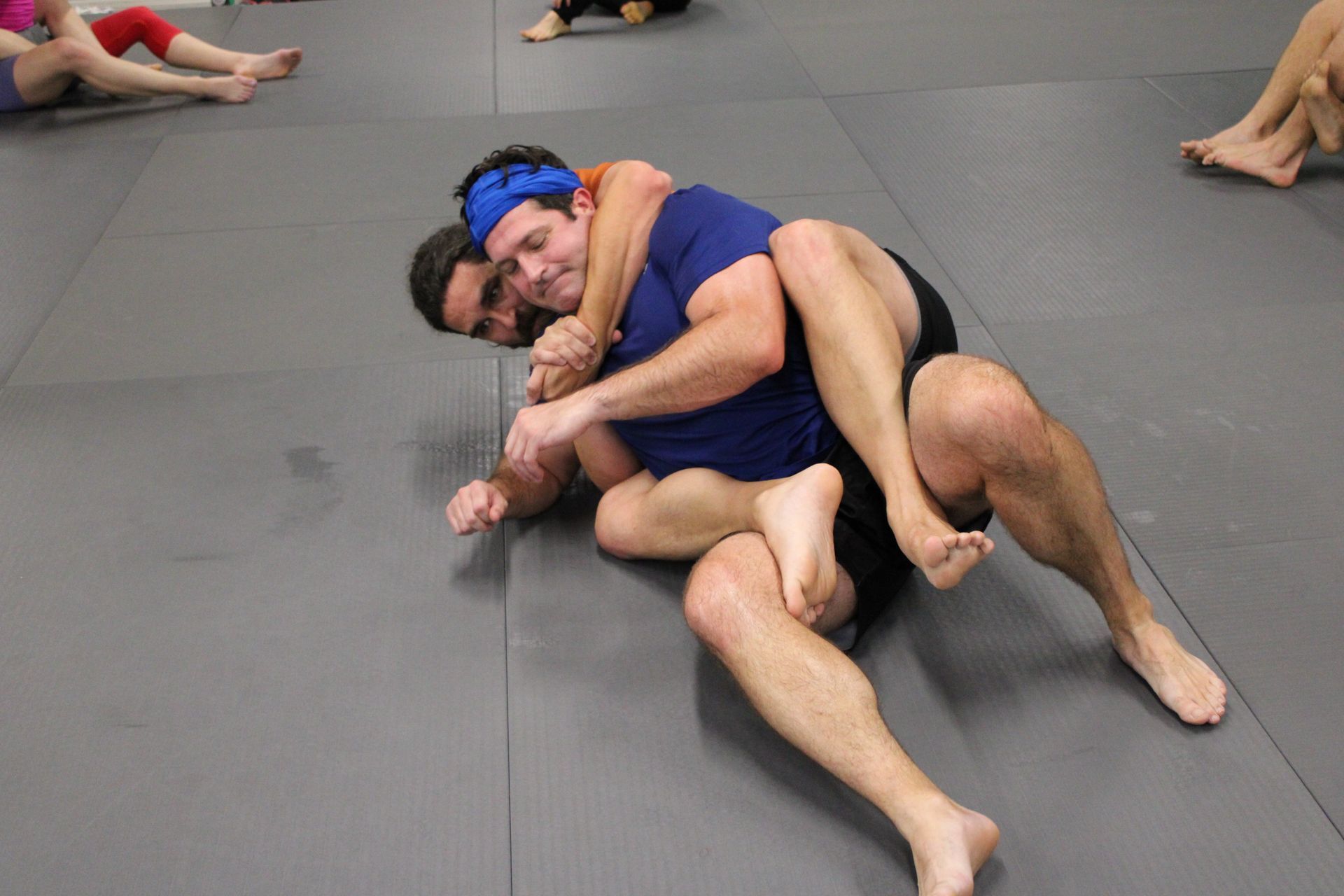
Jiu-Jitsu is often called a thinking person’s martial art, and that is not just a nice phrase. When you train, you learn how to manage distance, frames, grips, pressure, and timing. You also learn how to stay composed when your plan stops working, because that will happen, a lot.
The art’s focus on grappling and control is what makes it so practical. Size and strength matter in any sport, but Jiu-Jitsu gives you tools to create advantages through technique. Over time, you develop an ability to problem-solve while tired, while uncomfortable, and while someone is actively resisting you. That carries over to stressful situations off the mats in a way most workouts simply do not.
There is also a broader reason the sport keeps growing. The U.S. martial arts industry has been expanding quickly, reaching an estimated $21.0 billion by 2026 after several years of strong growth. Post-2020, many people started prioritizing health and personal development, and Jiu-Jitsu checks both boxes in a single practice.
What you will feel changing first: confidence, then discipline, then skill
Most beginners think confidence comes after you “get good.” In practice, it often shows up earlier, in small moments. You learn how to breathe when you are pinned. You learn that pressure is not panic. You learn you can tap, reset, and try again without ego running the whole show.
Discipline shows up next because progress in Jiu-Jitsu is not instant. Belt timelines are longer than many people expect. A recent survey of nearly 2,000 practitioners reported average time at white belt around 2.3 years, with blue belt taking about 2.3 years more, purple around 5.6 years total, and brown about 9.0 years total. That is not meant to intimidate you. It is meant to set expectations so you can relax and enjoy the process.
Skills come last, but they compound. Once a few fundamentals click, everything else becomes easier to understand. You start seeing patterns: how posture affects passing, how inside position affects takedowns, how small framing details change an entire escape. It is a long game, and that is part of what makes it meaningful.
What training looks like in our Chattanooga classes
Our coaching approach is structured, progressive, and built for longevity. We want you training next month, next year, and five years from now, not sprinting for a few weeks and burning out.
A typical class includes technical instruction, guided drilling, and live training with rules that match the experience level in the room. Some days feel like a workshop where details matter. Other days feel like you are getting a good sweat and learning through movement. Both are important.
We also keep the atmosphere focused but welcoming. You should feel challenged, but you should not feel thrown into the deep end without context. If you have never trained before, we will help you understand how to move safely, how to tap early, and how to work with training partners in a way that builds trust.
Gi and no-gi: how to choose the right starting point
One of the most common questions we hear is whether you should start in a gi or in no-gi. The good news is that both build strong grappling fundamentals, and Chattanooga tournaments regularly feature both divisions, which reflects how balanced the sport has become.
Gi training uses the uniform and grips, which slows certain exchanges down and makes control very technical. It is excellent for learning posture, base, and grip fighting in a clear, structured way.
No-gi tends to be faster and more slippery, with more emphasis on body positioning, underhooks, head position, and transitions. If you are specifically looking for Nogi Jiu-Jitsu in Chattanooga because you want practical skill transfer and an athletic pace, our no-gi training gives you exactly that environment.
If you are not sure, we recommend trying both styles. Many students end up enjoying the contrast: gi helps you sharpen details, and no-gi helps you express the same ideas with fewer grips and more movement.
A simple beginner roadmap you can actually follow
Starting Jiu-Jitsu does not need to be complicated, but it helps to have a plan. Here is the approach we recommend for most new students:
1. Pick consistency over intensity by training two to three times per week at first.
2. Focus on survival skills early, including frames, escapes, and how to tap quickly.
3. Track a few core positions like guard, side control, mount, and back control so you always know where you are.
4. Add live rounds gradually, treating them like practice instead of tests.
5. Ask one question after class and then drill the answer next time, because repetition is where you improve.
That roadmap keeps you moving forward without feeling overwhelmed. It also helps you avoid the common beginner trap of trying to learn everything at once.
Building lasting skills means training safely and smart
Jiu-Jitsu is a contact sport, and it is fair to ask about safety. Injury risk is real across grappling sports. One cited study found that 59.2 percent of athletes reported at least one injury in the prior six months, with knee and leg issues commonly mentioned even in rule sets that restrict certain submissions.
Our job is to keep your training productive while reducing unnecessary risk. That starts with how we structure intensity, how we pair training partners, and how we teach you to recognize when a position is turning dangerous. We also emphasize tapping early and protecting joints during scrambles, especially for newer students who are still learning body awareness.
You can also do a lot on your end. Sleep, hydration, and basic mobility work make a real difference. So does leaving your ego at the door. The goal is not to “win” practice. The goal is to get better while staying healthy.
Confidence for kids and teens: structure that actually sticks
Families in Chattanooga often look for martial arts because they want their child to gain confidence and discipline, not just burn energy for an hour. Jiu-Jitsu works well for that because the feedback is immediate and honest. When a technique works, you feel it. When it does not, you adjust.
Our youth training is built around clear rules, positive coaching, and progressive challenges. Kids learn how to listen, how to partner, and how to stay composed when something is difficult. That composure is a skill, and you can watch it grow over time.
We also keep safety and age-appropriate training at the center. Youth grappling can be competitive, and local events often include many kids and teen divisions in both gi and no-gi. Our focus is on building strong fundamentals, good habits, and a healthy relationship with training, so that competition is an option, not a requirement.
Fitness benefits that feel different than a normal workout
Jiu-Jitsu gets you in shape, but not in the same way as lifting weights or running intervals. You build strength through controlling positions, pulling, posting, and bridging. You build endurance through repeated rounds that challenge your breathing and your decision-making at the same time.
A lot of students tell us the biggest fitness change is not just physical. It is mental. You get better at staying calm while working hard, which carries over into work stress, daily routines, and even how you recover after a bad day.
We also like that fitness in Jiu-Jitsu comes with a skill. You are not just burning calories, you are learning how to move with purpose. That makes it easier to stay consistent long term.
What Jiu-Jitsu costs and what your time investment really looks like
Training is a commitment, and it helps to talk about it plainly. Surveys report monthly dues commonly ranging from about $131 to $173 depending on the state, and many people budget around $150 per month for consistent training. Because the sport has grown so much, some people also worry about whether it is “worth it” as a discretionary expense.
We see value in two places: the quality of instruction and the consistency of your schedule. If you train once a week, you will improve, but slowly. If you train three to four times per week, you will progress faster, build better conditioning, and often develop safer movement patterns because you are practicing frequently enough to stay coordinated.
We make it easy to plan by keeping the class schedule clear on the website, and we encourage you to choose a routine that fits your life. Sustainable training beats an ambitious schedule you cannot maintain.
How we support your progress between your first class and your first year
The first month is about learning how to learn. You are picking up terminology, getting used to the pace, and building comfort with close-contact movement. That is normal. Our coaches guide you through that stage so you do not feel lost.
Between months two and six, you start collecting “go-to” solutions: a reliable escape, a guard you understand, a pass that feels natural, and a submission you can set up safely. You will also start recognizing patterns in sparring, which is when training gets especially fun.
By the one-year mark, most students feel like Jiu-Jitsu has become a real part of their identity, not in a loud way, but in a steady way. You stand differently. You handle stress differently. You have proof that you can learn hard things through consistent work.
Ready to Begin
If you want Jiu-Jitsu in Chattanooga that builds confidence, discipline, and skills you can keep for life, we are ready to guide you step by step at Lógica Brazilian Jiu-Jitsu. Our approach is technical, supportive, and focused on helping you train consistently without feeling overwhelmed.
You do not need to be in shape to start, and you do not need a perfect schedule, either. You just need a first class, a willingness to learn, and a plan you can stick with, and we will take it from there at Lógica Brazilian Jiu-Jitsu.
Train with purpose and see real progress by joining a Jiu-Jitsu class at Lógica Brazilian Jiu-Jitsu.