If you learn these five fundamentals early, everything else in training starts to click faster.
Starting Jiu-Jitsu can feel like learning a new language with your whole body. You hear position names, grips, frames, and escapes, and it’s normal if it all blurs together for a bit. Our job is to make that early stage simple and safe: build the movements that keep you calm under pressure, then layer in control and finishing mechanics.
Here’s the truth we see every week in Chattanooga: beginners progress fastest when the first techniques are about survival and structure, not flashy highlights. Participation in grappling has climbed sharply since 2020, and NoGi has grown especially fast because it feels practical and accessible. That trend matches what we see on our mats, too.
So if you’re brand new, or you’ve tried a few classes and want a clearer roadmap, this guide is for you. These are the top five techniques we want you to master first, because they show up everywhere, in self-defense situations, in fitness-focused training, and in the kind of controlled sparring that actually helps you improve.
Why these five techniques matter for beginners in Chattanooga
Jiu-Jitsu rewards people who can stay composed in bad positions. That starts with movement and escapes, then guard skills, then high-percentage submissions that teach control. When you focus on fundamentals in this order, you’re not just collecting moves, you’re learning how to solve problems.
We also coach with a modern approach that favors positional sparring. In plain terms, that means you practice one situation repeatedly with clear goals, instead of trying to remember twenty steps at once. It’s one of the biggest reasons beginners stick with training and improve faster, because it turns chaos into something you can measure.
If you’re interested specifically in Nogi Jiu-Jitsu in Chattanooga, these techniques become even more important. Without gi grips, you rely on body positioning, connection, and timing. The basics do not change, but they matter more.
1. Shrimp, the hip escape you will use in every round
The shrimp, also called a hip escape, is the first movement pattern we want you to own. It’s how you create space when someone is pinning you, and it’s how you rebuild guard when you’re getting pressured. If Jiu-Jitsu had a single “get out of trouble” engine, this would be it.
Mechanically, shrimping teaches three crucial ideas at once: moving your hips independently from your shoulders, turning onto your side instead of staying flat, and using your legs to recover distance. Beginners often try to push with their arms, but arms get tired fast. Your hips and legs are the real power source.
In training, we build your shrimp from simple drills into live situations. You’ll use it to escape side control, re-guard from half guard, recover when your guard is getting passed, and even to set up offensive angles. It is not glamorous, but it is freedom.
Common beginner fix we coach
If your shrimp feels stuck, it’s usually because your feet are too close to your hips or you’re trying to move straight backward. We cue you to plant your foot, turn your hips, and “slice” away on an angle. Small detail, big difference.
2. Bridge and roll, the classic mount escape that builds confidence fast
Being stuck under mount is one of the most uncomfortable early experiences in Jiu-Jitsu. Your breathing feels limited, pressure feels heavy, and you may not know what to do with your hands. The bridge and roll, often called the upa escape, is our go-to answer for that exact problem.
The goal is simple: trap one arm, trap one foot, bridge your hips to load your partner’s weight, then roll into top position. For beginners, it’s a perfect technique because it’s direct and it teaches you to connect your movements. You’re not just flailing, you’re using a sequence that makes sense under pressure.
We also like this escape because it teaches smart habits: protect your neck, keep elbows tight, and avoid giving up your back during the scramble. When you can reliably escape mount, you relax, and relaxed training is safer and more productive.
A quick reality check
This escape works best when you bridge at an angle, not straight up. We’ll help you feel the timing, because timing is what turns “I know the steps” into “I can do it live.”
3. Guard retention, the skill that keeps you in the fight
Guard retention sounds like a fancy phrase, but it’s really a simple promise: you keep your legs between you and your partner so you’re not stuck underneath. For beginners, we prioritize closed guard retention early because it teaches you how to control distance, slow the pace, and protect yourself while you think.
In NoGi, guard retention depends on frames, hip movement, and connection, not sleeve grips. That’s why our coaching emphasizes posture control, inside position with your legs, and using your hips to follow the opponent’s movement instead of reaching with your hands.
When guard retention improves, everything else improves with it. Your escapes get easier because you’re not being pinned as often. Your submissions become more available because you’re not constantly defending a pass. And sparring feels less like survival and more like learning.
Here are a few guard retention concepts we drill early because they show up constantly:
• Keep your knees between you and your partner to manage distance when pressure increases
• Use frames with your forearms and hands to protect your head and create breathing room
• Angle your hips instead of staying square so you can recover guard with smaller movements
• Re-compose guard immediately after a scramble rather than accepting bottom side control
• Treat guard as a position you actively rebuild, not something you “lose once” and accept
If you’re searching for Jiu-Jitsu in Chattanooga and you want to feel progress quickly, guard retention is one of the fastest ways to feel that change. You’ll notice it in a couple weeks, not a couple years.
4. Americana armlock, a beginner submission that teaches control first
We love the Americana for beginners because it is not really about the finish. It’s about pinning the shoulder line, controlling the wrist, and understanding how leverage works when the body is tight and aligned. You’ll most often learn it from mount or side control, where the priority is staying heavy and stable.
A common early mistake is to chase the tap without securing the position. In Jiu-Jitsu, that backfires. So we coach the Americana as a lesson in sequencing: settle your weight, isolate the arm, keep the elbow bent and close to the mat, then apply pressure gradually with good mechanics.
This submission also translates well into NoGi because it doesn’t require cloth grips. Your connection comes from your hands, your chest position, and your hip placement. When done correctly, it feels controlled and predictable, which is exactly what we want in beginner training.
Safety note we take seriously
Shoulder locks come on fast. We teach you to apply pressure slowly and to release immediately when your partner taps. That habit makes training safer for everyone and keeps your progress steady.
5. Rear naked choke, the highest percentage finish from the best control position
If we had to pick one submission that belongs in every beginner’s toolbox, it’s the rear naked choke. The reason is simple: back control is the strongest position in grappling. You’re behind your partner, you can control their hips, and you’re not directly in front of their hands and legs.
The rear naked choke also teaches great fundamentals: hand fighting, staying glued to the back, and finishing with structure instead of squeezing with your arms. Beginners sometimes try to muscle it, but we coach you to build a clean frame with your choking arm, hide your hands, and tighten with your back and chest.
In Nogi Jiu-Jitsu in Chattanooga, the rear naked choke is especially important because it’s reliable without gi grips. When your control is correct, the finish is there. And when the finish isn’t there yet, the position still gives you options to transition and stay safe.
What we want you to feel
The choke should feel like steady pressure, not panic. If your shoulders and biceps burn, you’re probably over-squeezing. We’ll help you adjust your angles so the technique does the work.
How we help beginners connect these techniques into a real game
Learning five techniques is helpful, but the real win is learning how they connect. That’s where structured rounds and positional sparring come in. Instead of throwing you into random chaos, we build your confidence through repetition in specific scenarios: mount bottom to bridge and roll, side control bottom to shrimp and recover guard, guard retention rounds where your only goal is to keep your legs between you and your partner.
This approach matches what top coaches are emphasizing in 2024 and 2025: retention and progress improve when beginners practice positions with clear constraints. It also keeps training safer, because you’re not constantly surprised by unfamiliar intensity.
Here’s a simple progression we use to help you tie the five together, especially in your first weeks:
1. Learn the movement patterns first: shrimping and bridging with correct posture and breathing
2. Add the survival goal: escape mount and recover guard before worrying about submissions
3. Build guard retention habits: frames, hip angles, and quick re-guarding after scrambles
4. Introduce controlled finishes: Americana mechanics with tight positional control
5. Earn the back and finish: maintain back control, then apply a clean rear naked choke
When you train this way, Jiu-Jitsu stops feeling random. You start recognizing moments: “This is mount, I know my escape,” or “My guard is opening, I need to re-angle and recover.” That pattern recognition is what makes you dangerous in a calm, technical way.
What beginners usually notice after a few weeks of consistent training
Most people come in thinking they need to be stronger or more athletic first. In reality, what changes first is decision-making under pressure. You learn how to breathe when someone is on top of you. You learn how to move your hips, not just push with your arms. You learn that control beats speed.
And yes, you’ll probably feel sore at first. That’s normal. But it’s also a good sign that you’re using parts of your body you don’t typically challenge in regular workouts. Over time, your cardio improves, your posture improves, and you start leaving class with that grounded feeling that comes from doing something real and focused.
If your goal is self-defense, these five techniques matter because they prioritize escaping bad positions and controlling the situation. If your goal is fitness, these are full-body skills that build strength and coordination without mindless reps. Either way, they’re the right starting point.
Ready to Begin
If you focus on shrimping, bridging, guard retention, the Americana, and the rear naked choke, you’ll build a beginner foundation that holds up under real pressure. That’s the point of training: not collecting moves, but developing reliable responses you can trust when things get fast.
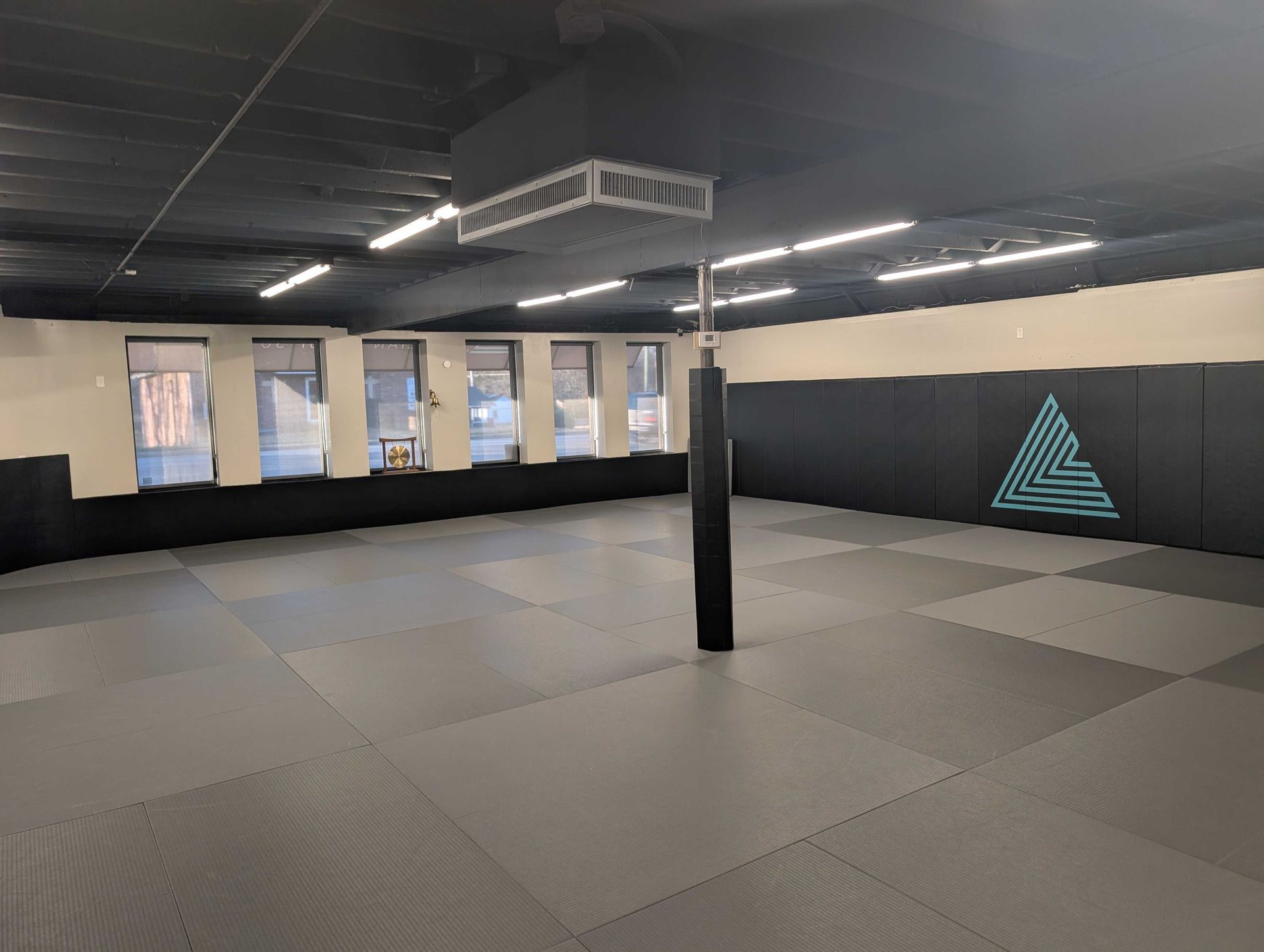
We teach these fundamentals every week at Lógica Brazilian Jiu-Jitsu, and we keep the learning environment structured so you can progress without feeling thrown into the deep end. If you’re ready to start Jiu-Jitsu in Chattanooga with a clear plan, we’ll help you build it step by step.
No experience is required to begin to join a class at Lógica Jiu-Jitsu and learn step by step.